- Route
- Eidsvoll verk – Hamar – Ringsaker – Lillehammer – Gjøvik – Kapp – Totenvika – Minnesund (E6, Fv 213, Rv 4 and Fv 33)
- Length
- about 250 km from Eidsvollsbygningen around Lake Mjøsa to Minnesund. From Oslo to Eidsvoll is around 65 km, and from Minnesund back to Oslo around 75 km.
- Driving time
- Around 4.5 hours without stops, plus about an hour each way to and from Oslo
- Recommended number of days
- 2–3
- Best season
- June–August. Skibladner usually sails from late June to mid-August, and several of the museums open only in summer. The roads are open all year.
- Difficulty
- Easy. Four-lane E6 and wide county roads, no mountain passes and no ferries. The thing to watch is the low railway underpasses in Hamar (see Roads).
- Last checked
- October 2026
Why this route?
Mjøsa is Norway's largest lake — 117 kilometres long and almost 450 metres deep at its deepest. Around it lies a good share of Norwegian history: the house where the Constitution was written, the ruins of a medieval cathedral, the Olympic town of 1994 and a paddle steamer that has sailed a timetable here since 1856. In between lie Hedmarken and Toten, some of the best farmland in the country.
The route heads north along the east shore and home along the west. The first stop is a little under an hour from Oslo, and hardly any leg takes more than an hour. That makes Mjøsa a good first trip in a motorhome: wide roads, short days and a pitch by the water every evening.
Stops along the route
1. Eidsvoll verk — where the Constitution was written
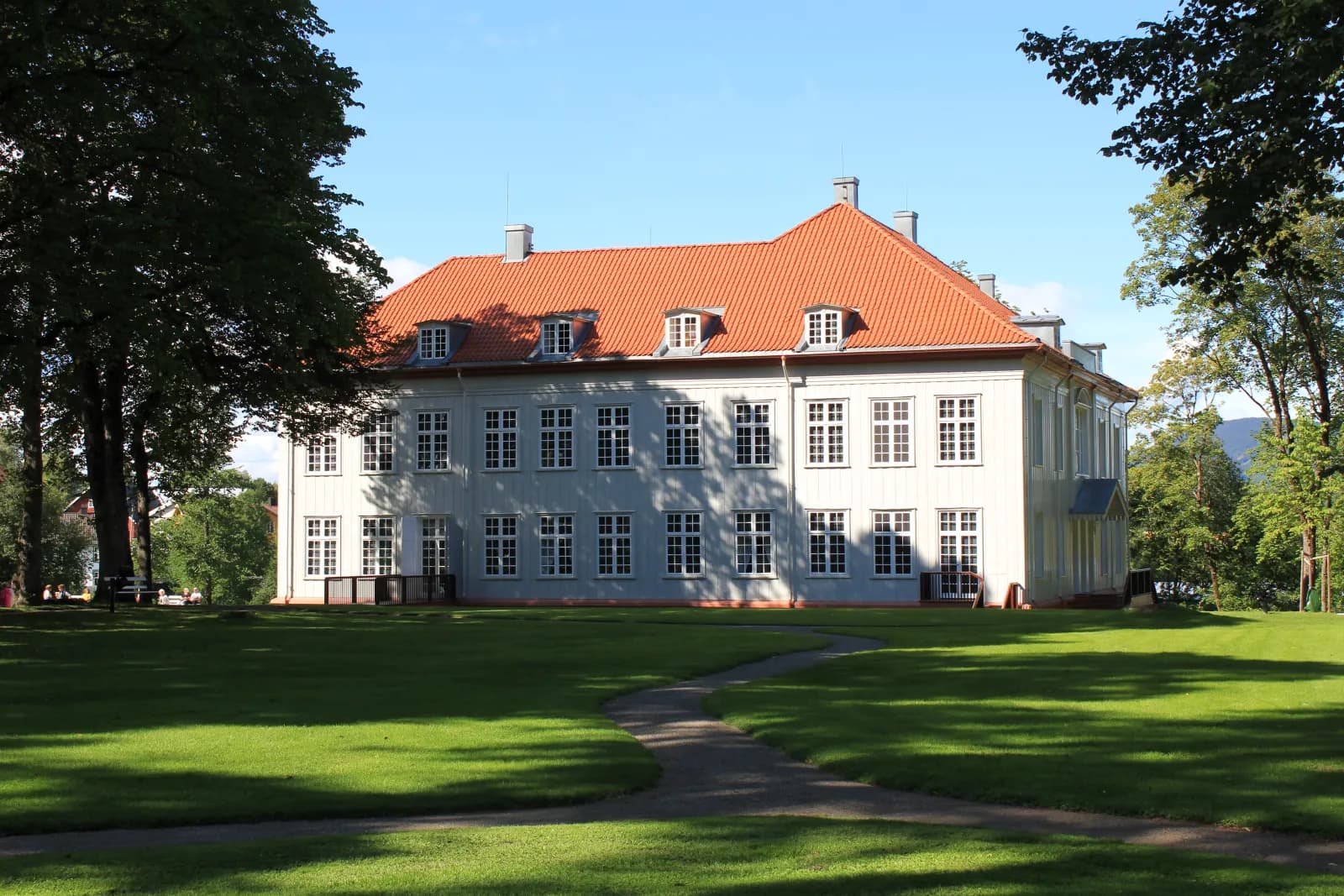
Carsten Anker owned the ironworks and enlarged the main house around 1800. In spring 1814 the Constituent Assembly met in his rooms, and on 17 May Norway had its constitution. The house belongs to Norsk Folkemuseum and reopened in 2014 after a long restoration.
Don't miss: Rikssalen, the assembly hall. You can only enter the house on a guided tour, which takes about three quarters of an hour. Book ahead if you can.
Motorhome tip: Leave the E6 at junction 55 at Nebbenes and follow the signs. The car park right outside is free, but the museum mentions no spaces for coaches or motorhomes. Come early on summer days.
2. Hamar — Domkirkeodden
The E6 takes you north along the lake through Stange. On the point west of the town centre stand the ruins of the cathedral. Hamar got its own bishop in 1152, and the church was finished around 1200. Swedish soldiers burned it in 1567. Over the ruins stands Hamardomen, a protective building of glass, but it has been closed since a pane broke in summer 2025. The open-air museum with around 60 old houses is open, and in 2026 the museum gained a new history centre. Storhamarlåven is open only in summer.
Don't miss: A trip on Skibladner. On every sailing day you can take a round trip from Hamar and back, so the motorhome can stay parked at Tjuvholmen. Dogs are not allowed on board.
Motorhome tip: Leave the E6 at junction 70, Hamar vest — the Skibladner company asks all vehicles over two metres high to do so, because the underpasses in the centre are low (see Roads). Across Strandvegen there is paid parking, motorhomes and coaches included. Sleep at Hamar Båtforening's motorhome site on Tjuvholmen, a few minutes from the centre and the Skibladner quay: 25 pitches with electricity and waste disposal, usually open from June to September. Pitches cannot be booked.
3. Ringsaker kirke — the altarpiece from Antwerp
Carry on along the E6 past Brumunddal, leave at junction 76 by Moelv and drive around 2.5 km south on the Fv 213. There Ringsaker church stands on the slope above the lake. It was built of stone in the mid-1100s, and the spire was added in 1652. The altarpiece was made in Antwerp early in the 1500s, and no altarpiece in Norway is more richly decorated.
Motorhome tip: Check ahead whether the church is open, and keep the car park free for churchgoers during services and funerals. Turn round at the church and follow the Fv 213 through Moelv and on along the east shore to Lillehammer: a wide, easy road, but the Brøttum hills are steep, so use engine braking. The fast way is the E6 across Mjøsbrua.
4. Lillehammer — Maihaugen
The museum is the work of a dentist, Anders Sandvig. From 1887 he built up a collection from the surrounding villages, and in 1904 it opened as an open-air museum at Maihaugen. Today more than 200 buildings stand here, among them Garmo stave church from the 1200s. Norges Olympiske Museum, the Norwegian Olympic Museum, is in the same complex.
Don't miss: Garmo stave church.
Motorhome tip: From 1 June to 31 August a separate area for motorhomes is signposted at the museum's large car park, north of the main building. Parking is charged by the day, and between 10 pm and 7 am you may not stay there. Dogs on a lead are welcome outdoors at the museum, but not inside the houses.
5. Lysgårdsbakkene — the Olympic arena above the town
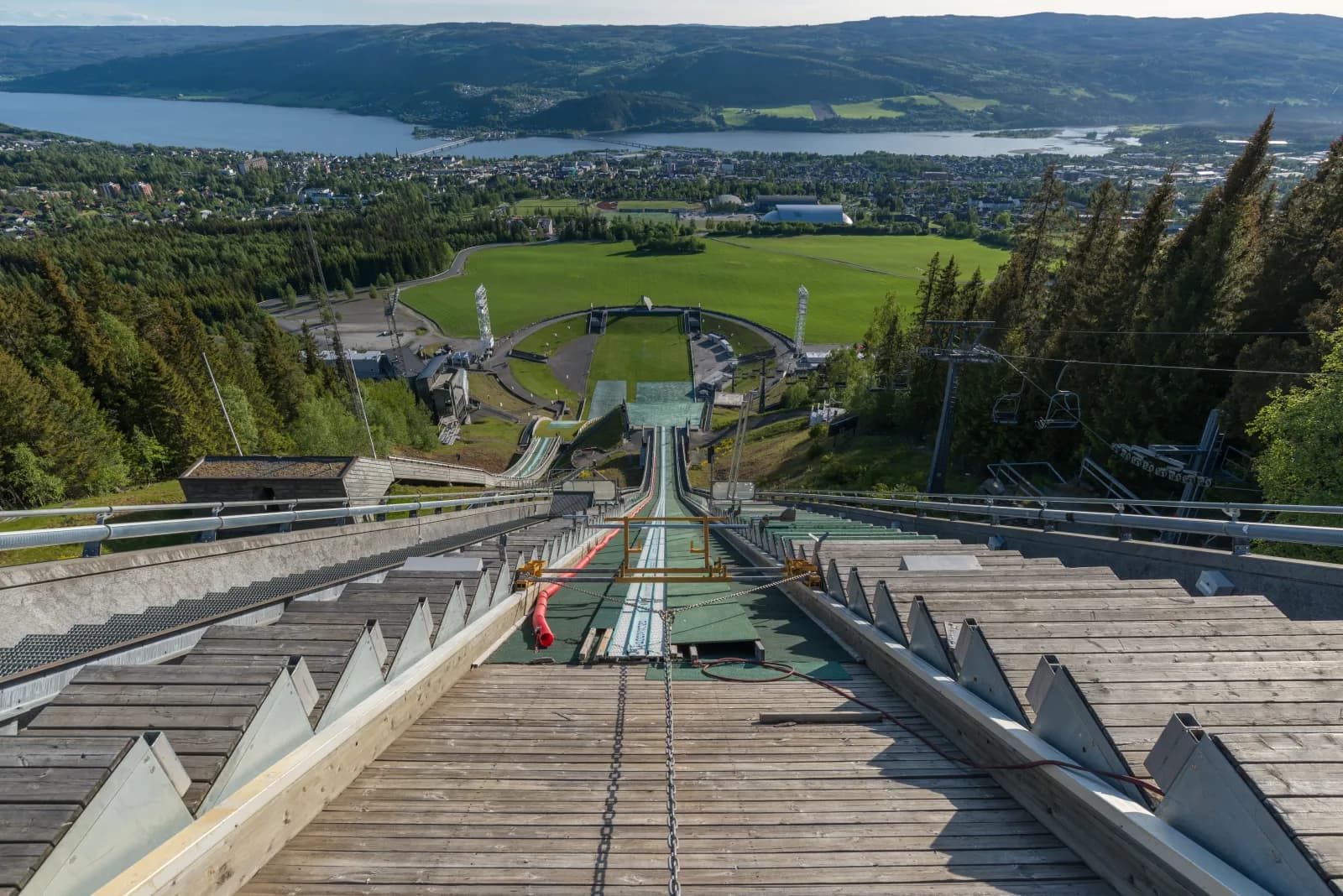
A couple of kilometres up the hillside lie the ski jumps of the 1994 Olympics. Down on the flat at the bottom the Games were opened and closed, with room for around 50,000 spectators. From the top of the large hill, 500 metres above sea level, you see all of Lillehammer and Mjøsa stretching south.
Don't miss: The 936 steps beside the hill. Take the chairlift one way — it usually runs from May to September.
Motorhome tip: Olympiaparken runs a simple, self-service summer campsite at Birkebeineren ski stadium, a little further up the hillside, with electricity and grey-water disposal. Lillehammer Camping lies by the lake and is open all year; book a pitch in summer.
6. Gjøvik — Skibladner's home port
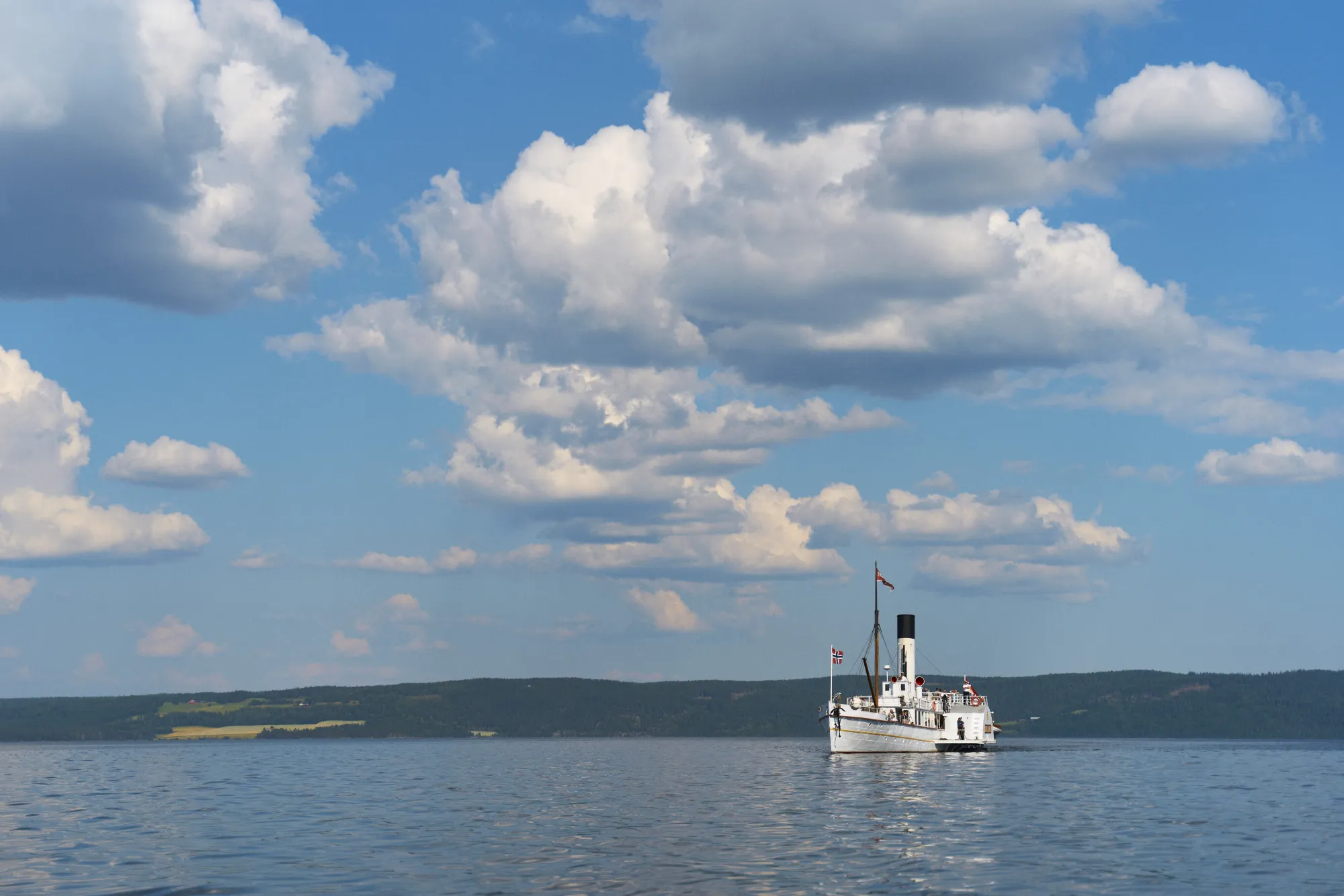
The way home runs along the west shore: the E6 south to Mjøsbrua and the Rv 4 on to Gjøvik. The paddle steamer came from a shipyard in Sweden and has plied Mjøsa since 1856. No ship in service in Norway is older. Gjøvik is its home port, and it has had its own winter shed here since 2001. In the middle of town is also Fjellhallen, blasted out inside the mountain for the 1994 Olympics. No hall for spectators inside a mountain is larger.
Don't miss: Gjøvik gård in the park by the quay. The glassworks owner built the main house in 1810, and the museum opens in summer.
Motorhome tip: Just south of the Skibladner quay there is a motorhome car park. At the Circle K Mjøsstranda filling station nearby there is a waste disposal point, but it may be closed in winter. Sveastranda Camping on the Rv 4, around 13 km north of town, is open all year, and guests empty their cassettes free of charge.
7. Kapp — the milk factory and Peder Balke
The Fv 33 takes you south, and Mjøsvegen leads down to the water at Kapp. A milk factory opened here in 1891, using a method for condensed milk without sugar. In 1898 it was sold to Nestlé, and the Swiss company had never before bought a factory in another country. Today Mjøsmuseet shows the exhibition Mjøsas ark in the factory buildings, on 8,000 years of history around the lake. It is open during the school summer holidays.
Don't miss: Peder Balke-senteret at Billerud, three kilometres south. The banqueting hall there has twelve wall paintings that Balke painted in 1834, and the gallery opens for the season in mid-May.
Motorhome tip: Park by the milk factory; in 2026 Skibladner called at the quay here on Tuesdays and Fridays. Hekshusstranda Camping, down by the water, is a three-kilometre drive.
8. Totenvika — the vegetable village
The road on runs through fields and farmyards, and Toten counts among the richest farming districts in Norway. At Totenvika the Lenaelva river flows into Mjøsa, and its delta is a nature reserve. Around here the lake is at its widest, about 15 kilometres across to Hamar. Just south of the bay lies Evjua, with a beach, a marina and the summer restaurant Viken II — built to look like one of the old Mjøsa boats.
Motorhome tip: Evjua Strandpark has more than 40 touring pitches with electricity, open all year, and a municipal waste disposal station by the service building, fixed tanks included. Fill up as you drive through Skreia, before Evjua: along Feiringvegen there is no filling station until Minnesund.
9. Minnesund — where Mjøsa becomes the Vorma
The Fv 33 follows the water south past Feiring, below steep, wooded hills. At Minnesund the lake flows out into the river Vorma. Under the E6 bridge lies Mjøssamlingene. The museum shows how people and goods were carried on Mjøsa, in old boathouses and with boats that can still sail. It was on the slipway here that the paddle steamer was assembled in 1856, and it is still hauled up here whenever it needs an overhaul.
Don't miss: A swim before heading home. The museum grounds are open for swimming and picnics in summer, and during the school holidays there are guided tours on Sundays.
Motorhome tip: The E6 runs right above you, and the Circle K at Minnesund is open around the clock. From here it is around 75 km home to Oslo.
Practical info for motorhomes
Roads: The E6 is four-lane from Eidsvoll to Moelv. The Fv 213 and Fv 33 mostly have 6–8 metres of asphalt, the Rv 4 more, and every road on the route is open to vehicle combinations of 19.5 metres (the Norwegian Public Roads Administration's road database). No mountain passes and no roads closed in winter. The tight spot is the railway in Hamar, which runs between the centre and the lake: the underpass by the station is only 2.4 metres, the one by the Skibladner quay 2.9 metres and the one by the old brewery in Storhamargata 3.0 metres. From junction 70 on the E6, follow Arnkvernvegen and Kårtorpvegen to Vognvegen, which passes under the railway by the Maxi shopping centre (signed 3.6 metres). From there the road runs along the water to Domkirkeodden and Tjuvholmen. If your motorhome is taller, take Nystuvegen further north (4.2 metres). Until 2030 Nye Veier is building a new E6 from north of Biri past Lillehammer, so expect roadworks there. Check vegvesen.no before you set off.
Tolls: The E6 has toll stations between Minnesund and Moelv. If you drive home from Gjøvik on the Rv 4, there are tolls on Hadeland, and on the way into Oslo you pass the city toll ring either way. A motorhome over 3,500 kg registered as M1 pays the light-vehicle rate only with an AutoPASS agreement and tag — ask the owner whether the motorhome has a tag.
Parking: Domkirkeodden has room for motorhomes, and Maihaugen has its own motorhome parking in summer. There is little space by the Skibladner quay in Lillehammer.
Overnight stays: The local police by-laws in Lillehammer and Østre Toten ban camping on and beside roads and squares in built-up areas and in parks and open spaces, unless signs say otherwise; in Hamar the ban covers parks and open spaces. The Outdoor Recreation Act lets you pitch a tent in uncultivated land at least 150 metres from an inhabited house or cabin and for no more than two nights without the owner's or user's permission, but it gives no separate right to a motorhome: it stands where parking is allowed. Around Mjøsa, moreover, much of the land by the water is farmland, gardens and plots — cultivated land. Use the campsites and motorhome sites, and never drive off-road.
Campsites:
- Hamar Båtforening's motorhome site, Tjuvholmen — June–September
- Topcamp Mjøsa, Brumunddal — by the water
- Lillehammer Camping — all year
- Lillehammer Turistsenter — all year except Christmas
- Olympiaparken's summer campsite, Birkebeineren ski stadium — self-service
- Sveastranda Camping, between Mjøsbrua and Gjøvik — all year
- Hekshusstranda Camping, Kapp
- Evjua Strandpark, Totenvika — all year
Fuel: Plenty of filling stations along the E6 and in the towns. In Gjøvik, Circle K Mjøsstranda is open around the clock. On Toten, fill up in Skreia; along Feiringvegen there is nothing until Minnesund.
Waste disposal: At Tjuvholmen in Hamar (summer), at Circle K Mjøsstranda in Gjøvik (may be closed in winter), at Evjua in Totenvika (fixed tanks too) and at the campsites. See also bobilplassen.no.
Ferries: No ferries on the route. Skibladner carries only passengers and bicycles, usually from late June to mid-August. In 2026 it sailed from Gjøvik north to Lillehammer on Wednesdays and Saturdays and south to Eidsvoll on Tuesdays and Fridays. Booking is a good idea, especially if you want to eat on board. Timetables at skibladner.no.
Combine with
- Rondane and the Peer Gynt Road — from Lillehammer it is around 40 km to Skei in Gausdal, where the Peer Gynt Road begins.
- Valdres and Valdresflye — from Gjøvik the Fv 33 and E16 take you west via Dokka to Fagernes, around 100 km.
- Femunden and Engerdal — from Hamar it is 31 km to Elverum, where that route begins.
- The Vestfold Coast — another weekend trip from Oslo, with the sea instead of the lake.
Weather
Mjøsa has an inland climate: warmer summers and colder winters than on the coast. In Hamar the normal daily mean is 17 degrees in July and almost minus six in January. Around 500 millimetres of precipitation fall in a normal year, most of it in July and August. Check yr.no for Hamar, Lillehammer and Gjøvik.
This route is part of Bobilvei's hand-picked motorhome routes in Norway. Every route is quality-checked with a focus on motorhome suitability, parking and local experiences.