- Route
- Elverum – Trysil – Engerdal – Drevsjø – Femundsenden – Isterfossen – Sømådalen – Tolga – Tynset – Elverum (Rv 25, Fv 26, Fv 30, Rv 3), with detours to Elgå and Jonasvollen
- Length
- about 460 km around the loop: about 240 km from Elverum to Tolga, about 220 km back through Østerdalen. The Elgå and Jonasvollen detours are about 80 and 45 km return respectively. Oslo to Elverum is about 145 km.
- Driving time
- Around 8 hours without stops for the whole loop, plus around 2 hours each way between Oslo and Elverum
- Recommended number of days
- 3–4
- Best season
- June–September. The scheduled boat on Femunden usually runs from mid-June to early September. Roads are open all year.
- Difficulty
- Easy. Asphalt all around the loop, no ferries. The detours include gravel: around eight kilometres of wide gravel road towards Elgå and a private gravel road down to Jonasvollen. Distances are the challenge: few shops, little fuel, and reindeer and moose on the road.
- Last checked
- October 2026
Why this route?
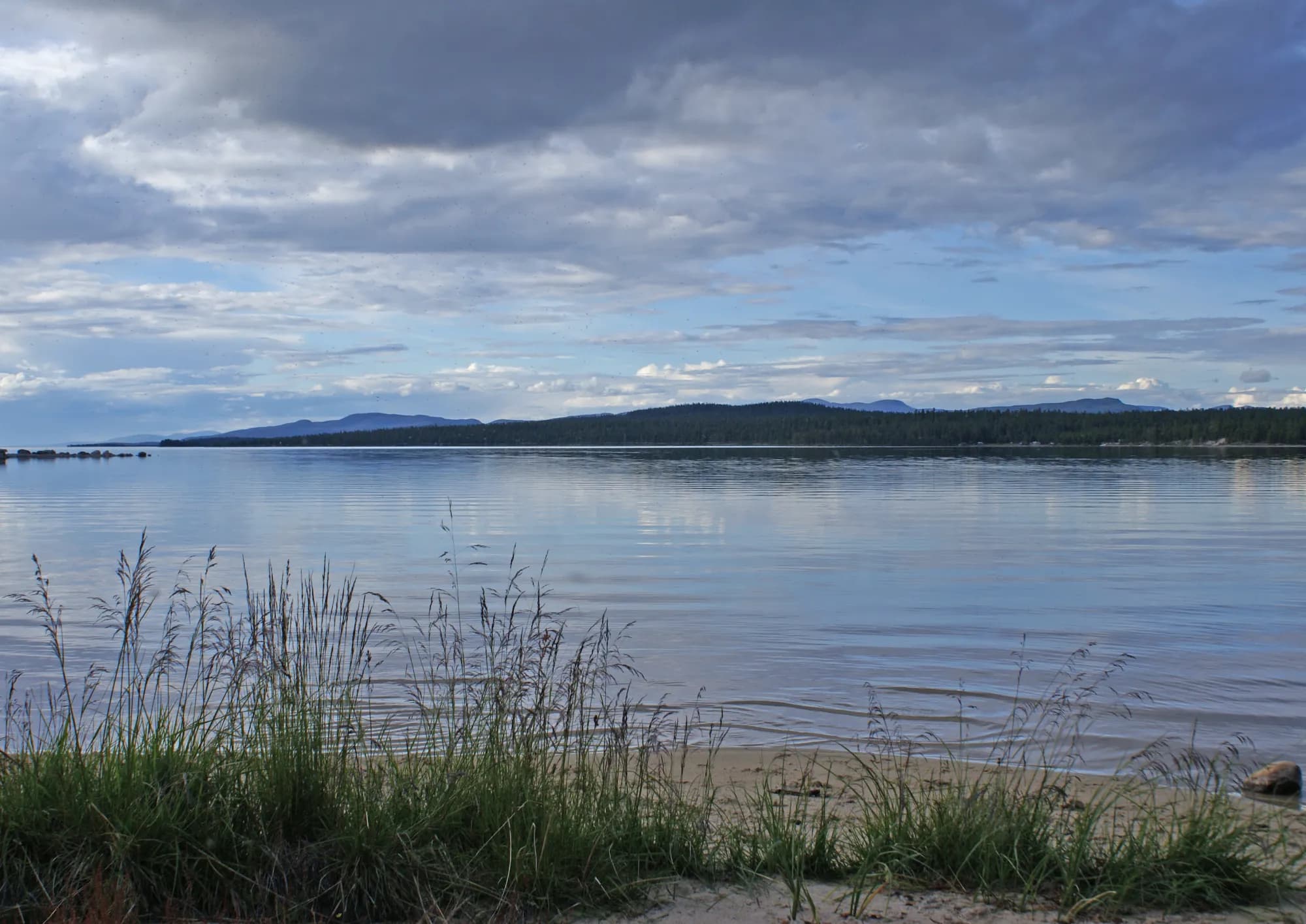
Two hours from Oslo the forest begins, and never ends. Engerdal borders Sweden, and deep inside lies Femunden — the country's third-largest lake, almost 60 kilometres long and 662 metres above sea level. No hydropower plant has regulated it.
This is not a trip with many sights. It offers long, empty roads, reindeer taking their time crossing the asphalt, and evenings beside a lake where mosquitoes are all you hear. East of the lake lies Femundsmarka national park: pine, rock and water, with no roads in. You reach it on foot, by canoe or on a scheduled boat from 1905.
The loop goes out via Trysil and returns through Østerdalen, without driving the same road twice.
Stops along the route
1. Elverum — Norsk skogmuseum
The museum beside Solørvegen explores the forest and life in it, including hunting and fishing. It is open every day, and a suspension bridge leads to the neighbouring Glomdalsmuseet.
Motorhome tip: Elverum Camping lies beside the Glomma, just over a kilometre south of the centre. Motorhomes arrive without booking.
2. Trysil — the last big shopping stop
The Rv 25 follows the forest east for just over an hour to Innbygda, Trysil's centre. This is the last place with several shops and fuel stations before Femunden.
Motorhome tip: Fill up, shop for several days and empty the toilet. Map data shows a dump station beside Vestsidevegen at Mosanden, just south of the centre. From here follow Fv 26 north.
3. Drevsjø — the wilderness museum
Fv 26 runs through the forest to central Engerdal and on up to Drevsjø, where the road to Idre in Sweden branches off. Drevsjø is known for cold: the weather station's annual mean temperature is 1.2 degrees.
Don't miss: Blokkodden villmarksmuseum. It explores life in the forest and mountains, logging and South Sámi culture. It is open in summer with a café, usually from late June to early August.
Motorhome tip: Central Engerdal has an automated fuel pump. After Trysil, pumps are few and shops small.
4. Femundsenden — where the lake drains
Seven kilometres west of Drevsjø you reach Femunden's southern end. From here water flows out through Gløta and onward as Femundselva and Trysilelva.
Motorhome tip: Femundtunet beside Fv 26 has motorhome and caravan pitches with electricity. A good base for two nights.
5. Elgå — reindeer and the national park centre
Just over two kilometres east of Femundsenden, Fv 2210 branches off Fv 26. It and Fv 221 run around forty kilometres north along the lake's eastern shore, past Sorken to Elgå. No permanent Sámi settlement in Norway lies further south than Elgå. Reindeer husbandry in Elgå has capacity for 7,000–8,000 animals, many of which walk along the road.
Don't miss: The Femundsmarka national park centre, and the hamlet's café and shop.
Motorhome tip: Around eight kilometres of Fv 2210 are gravel, but the road is wide, mostly around seven metres, and open to vehicle combinations of 19.5 metres. Drive slowly: reindeer move when they choose. The road to Elgå is a dead end for you, so you return the same way. Elgå has a large paid car park that also permits long-term parking.
6. Femundsmarka national park — on foot or by canoe
The national park was established in 1971. Its 573 square kilometres contain sparse pine woods, scree and bare ridges, and more than a tenth is water. No roads lead in. From Elgå it is around eight kilometres to the staffed DNT lodge Svukuriset, by gravel road or marked path.
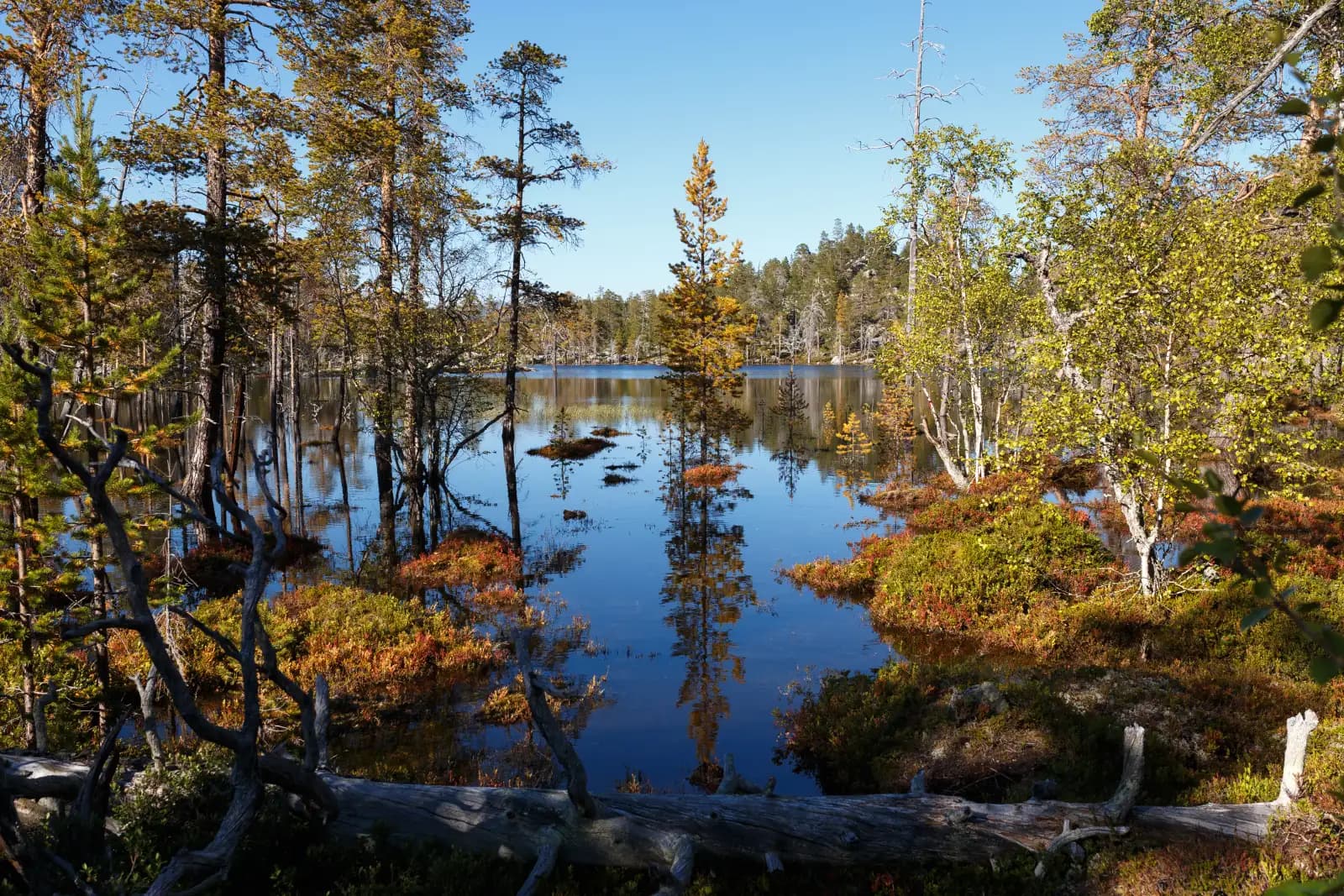
Don't miss: An evening beside a small lake in the wilderness. The area is important for ospreys.
Motorhome tip: You cannot drive to Svukuriset — leave your motorhome in Elgå. All off-road driving is prohibited. Bring insect repellent; mosquitoes can be troublesome in July.
7. Isterfossen — Femundselva gathers speed
Back at Femundsenden, follow Fv 26 west. After just under ten kilometres you reach Isterfossen, at the southern end of Isteren lake.
Motorhome tip: Fv 217 branches off here towards Koppang. It is a shorter way home, but you miss Sømådalen.
8. Sømådalen and Buvika — the old fishing village
Fv 26 heads north through forest and marsh to Sømådalen, with its general store and fuel. Follow Fv 28 towards Røros, and after just over five kilometres a sign points down to Buvika. The fishing village on Femunden's western shore had no road until 1954. The café occupies an old warehouse by the jetty.
Motorhome tip: The road down to Buvika's jetty is gravel, with parking at the bottom. With a large motorhome, check that there is room before driving all the way down. Johnsgård Turistsenter beside Langsjøen has space for caravans and motorhomes; the family has welcomed camping guests since 1968.
9. Jonasvollen — a trip on Fæmund II
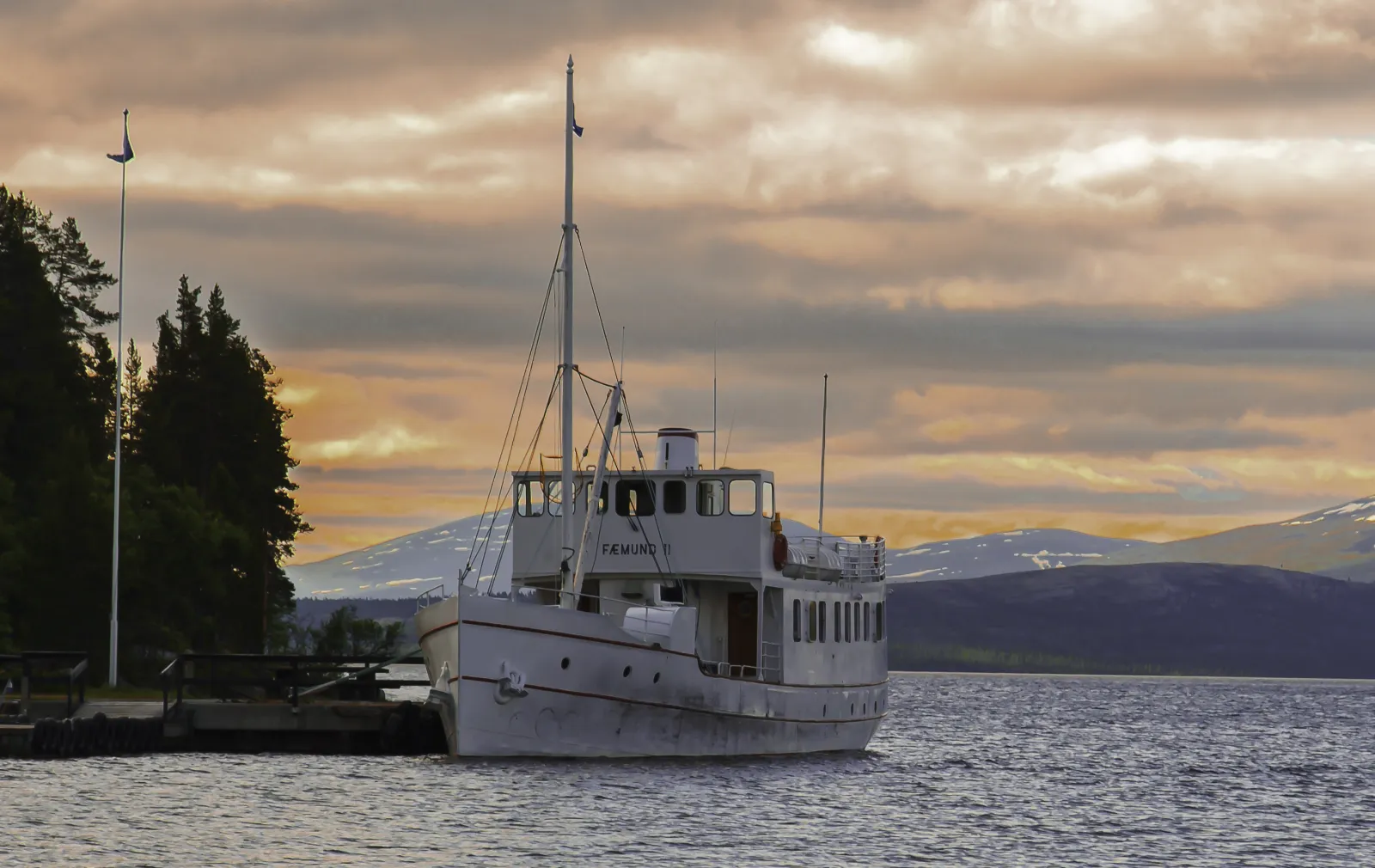
Further north on Fv 28, a turning leads down to Jonasvollen. Fæmund II was completed in 1905 after its parts travelled by train from Trondheim and by horse for the final stretch. Today it carries only passengers, with canoes, bicycles and dogs, but no cars. In summer you can leave the motorhome at Jonasvollen, sail across to Elgå and be back after a couple of hours. On Saturdays in midsummer the boat continues to Buvika, making the trip from Jonasvollen around four hours.
Don't miss: The trip itself — islets, mountains and no roads in sight.
Motorhome tip: The last roughly five kilometres down to Jonasvollen are a private gravel road. Jonasvollen Camping has caravan pitches and is open all year. Check schedules at femund.no; in bad weather the boat may skip stops.
10. Tolga and Østerdalen — home beside the Glomma
From Sømådalen, Fv 26 heads west through Øversjødalen and Hodalen down to Tolga beside the Glomma. Fv 30 continues towards Tynset. Where the road forks just before the centre, take Nebyveien to Rv 3 northwest of the centre. Then follow Rv 3 all the way down Østerdalen, past Alvdal, Atna, Koppang and Rena to Elverum.
Motorhome tip: Do not take Fv 30 into central Tynset: it passes beneath the railway with a signed height of 3.6 metres. Stay on Rv 3 all the way to Elverum, even if navigation suggests side roads. Between Tynset and Alvdal, Fv 2222 has a bridge signed at 3.6 metres and Fv 2252 one at 4.1 metres; Fv 2188 on the eastern side south of Koppang has 3.7 metres. On Rv 3 the lowest signed height is 4.4 metres, under a bridge at Atna. There is a dump station beside Rv 3 in Alvdal.
Practical info for motorhomes
Roads: Rv 25, Fv 26, Fv 28, Fv 30, Rv 3 and the road to Elgå (Fv 2210 and Fv 221) are open to vehicle combinations of 19.5 metres (Statens vegvesen's road database). All are paved except around eight kilometres of wide gravel on Fv 2210 and the gravel roads down to Jonasvollen and Buvika's jetty. From Tynset to Elverum, stay on Rv 3 — several side roads and Fv 30 through central Tynset have bridges below four metres. Roads are open all year, but help is far apart in winter. Check vegvesen.no/trafikk or call 175.
Parking: Elgå has a large car park allowing long stays. There is also parking by Buvika's jetty and at Jonasvollen. Never park in passing places or at forestry-road entrances.
Overnight stays: The Outdoor Recreation Act allows tents on uncultivated land at least 150 metres from an inhabited house or cabin, for at most two nights in one place without the landowner's consent. It gives no right to park a motorhome; signs and landowner rules apply. Never drive off-road into the terrain. Use campsites.
Campsites:
- Elverum Camping — beside the Glomma in Elverum, motorhomes without booking
- Femundtunet — at Femundsenden, pitches with electricity
- Johnsgård Turistsenter — beside Langsjøen in Sømådalen, high season from the last weekend in June to the third weekend in August; call before arriving in winter
- Jonasvollen Camping — beside Femunden north of Sømådalen, open all year
Fuel: Fill up in Trysil. Afterwards there are only small filling points: an automated pump in central Engerdal and, according to map data, also at Drevsjø, Elgå and Sømådalen. Opening hours may be short. The next larger places are Tolga and Tynset.
Waste disposal: In Trysil on the way in and beside Rv 3 in Alvdal on the way home. We found no public dump station in Engerdal — ask the campsite when booking.
Ferries: No ferries. The scheduled Fæmund II carries passengers only.
Combine with
- Trondheim – Røros — Fv 28 and Fv 30 take you from Sømådalen to Røros, about 75 km. Synnervika, Fæmund II's home port, is at Femunden's northern end.
- Rondane and Peer Gynt-vegen — from Rv 3 in Alvdal, Rv 29 takes you to Folldal in around 40 km. Follow that route in reverse.
- Idre in Sweden — Fv 221 takes you from Elgå to the border and on to Idre.
- Around Mjøsa — Elverum to Hamar is 31 km.
- Solør and Finnskogen — ends in Elverum, where this route begins. Drive it in reverse, south to Kongsvinger.
Weather
Femunden lies 662 metres above sea level, and Drevsjø is known for low temperatures: the January mean is almost nine degrees below zero. Even in summer nights can be cold, so pack warm clothing. Check yr.no for Drevsjø, Elgå and Sømådalen.
This route is part of Bobilvei's hand-picked motorhome routes in Norway. Every route is quality-checked with a focus on motorhome suitability, parking and local experiences.