- Route
- Kristiansand – Lillesand – Grimstad – Arendal – Tvedestrand – Risør – Kragerø (E18 and fv. 420)
- Length
- about 180 km (about 210 km with the side trips to Tromøy and Gjeving)
- Driving time
- 3–4 hours without stops, but the short legs are the whole point
- Recommended number of days
- 5–7
- Best season
- June–August for swimming. May and September are quieter, but several campsites close during September.
- Difficulty
- Easy. Good main roads, no mountain crossings and no ferries. The challenges are narrow town-centre streets and full car parks in July.
- Last checked
- October 2026
Why this route?
Sørlandskysten is the holiday many remember from childhood: smooth coastal rocks, catching crabs, ice cream on the quay and white wooden houses around the harbour. The towns are so close that no day needs more than an hour behind the wheel.
This is not a National Tourist Route. Follow the E18 east and turn towards the sea: fv. 420, the old coast road, as far as Arendal, then short county roads down to the towns further east. The motorhome question is parking in the white towns in July, rather than the road — which is why each stop below tells you where to park.
Stops along the route
1. Kristiansand — Dyreparken and Hamresanden
Dyreparken east of town has animals, Kardemomme by and Kaptein Sabeltanns verden, and is open all year. The water park opens from May to August. Nearby is Hamresanden, a long sandy beach beside Topdalsfjorden.
Motorhome tip: Dyreparken Bobilcamp is a couple of hundred metres from the entrance, but only takes motorhomes up to 8 metres, on a drop-in basis only, from March to October. For a longer vehicle, ask Hamre Familiecamping at Hamresanden (open all year, a few minutes away) or Roligheden Camping for a pitch.
2. Lillesand — white houses and Blindleia
The first of the white towns: wooden houses facing the harbour. From here Blindleia runs southwest, a sheltered boating passage between the islands and the mainland.
Don't miss: The scheduled boat “Øya” through Blindleia to Kristiansand, around three hours. It only runs from late June to early August. Take the boat one way and the bus back.
Motorhome tip: Do not drive into the centre. Tingsaker Familiecamping stands by the sea, five minutes' walk from town, with a gently shelving sandy beach and free canoe use. Motorhome pitches are drop-in only — arrive early in July.
3. Grimstad — Ibsen's pharmacy
In Grimstad, narrow streets wind between protected houses from the 18th and 19th centuries. Henrik Ibsen worked at the town's pharmacy from 1844 to 1850, and the house where he wrote his first play is now the Ibsen museum.
Don't miss: Fv. 420 past Fevik to Arendal, a quieter alternative to the E18.
Motorhome tip: Grimstad municipality has no public overnight motorhome parking and refers visitors to the campsites. Moysand Familiecamping, around six kilometres northeast of the centre towards Fevik, is large and has its own beach and shop.
4. Arendal — Tyholmen and Merdø
Tyholmen is the oldest part of town. Its wooden houses survived when the rest of town was rebuilt in masonry after the town fires. Below lies the marina Pollen, from where boats leave for Merdø in summer.
Don't miss: Merdø, with the captain's house Merdøgaard from 1736 and a sandy beach suitable for young children.
Motorhome tip: No motorhome pitches in the centre. The municipality provides free motorhome parking at Høgedal, half an hour's walk from town, with a bus into the centre. Arendalsuka takes place in week 33, when the town is full.
5. Hove and Raet National Park — Tromøy
Raet is a national park made up almost entirely of sea. Its name comes from the moraine left by the ice: coarse stones on the outside, sand further in. At Hove, in southwest Tromøy, there are gently shelving sandy beaches, smooth coastal rocks, a playground, kiosk and climbing park.
Motorhome tip: Hove leirsenter has drop-in motorhome pitches with electricity, water and cassette-toilet emptying. Elsewhere at Hove, overnight stays in motorhomes are forbidden, and Raet Camping on Hoveodden does not take motorhomes.
6. Tvedestrand and Lyngør
Tvedestrand's centre climbs steeply from the quays at the head of the fjord, and it has been a book town since 2003.
Don't miss: Lyngør, a car-free island community where the frigate “Najaden” fought a British ship of the line in 1812. The boat from Gjeving runs all year, and the crossing is short.
Motorhome tip: The municipality has seven motorhome pitches by the bathing park behind the municipal offices, for a maximum of two days, without electricity or water. The pitches by the guest harbour are intended for smaller motorhomes. If all are full, Tromøy and Risør are alternatives. For Lyngør, Risøy bobilcamp is just under two kilometres from Gjeving. Risøy folkehøyskole operates this unstaffed grass site with electricity, water and cassette-toilet emptying; payment is by Vipps. It opens from around 20 May to around 20 October, but closes for two weeks in July when reserved for festivals and other events — check with the school before driving out.
7. Risør — the white town
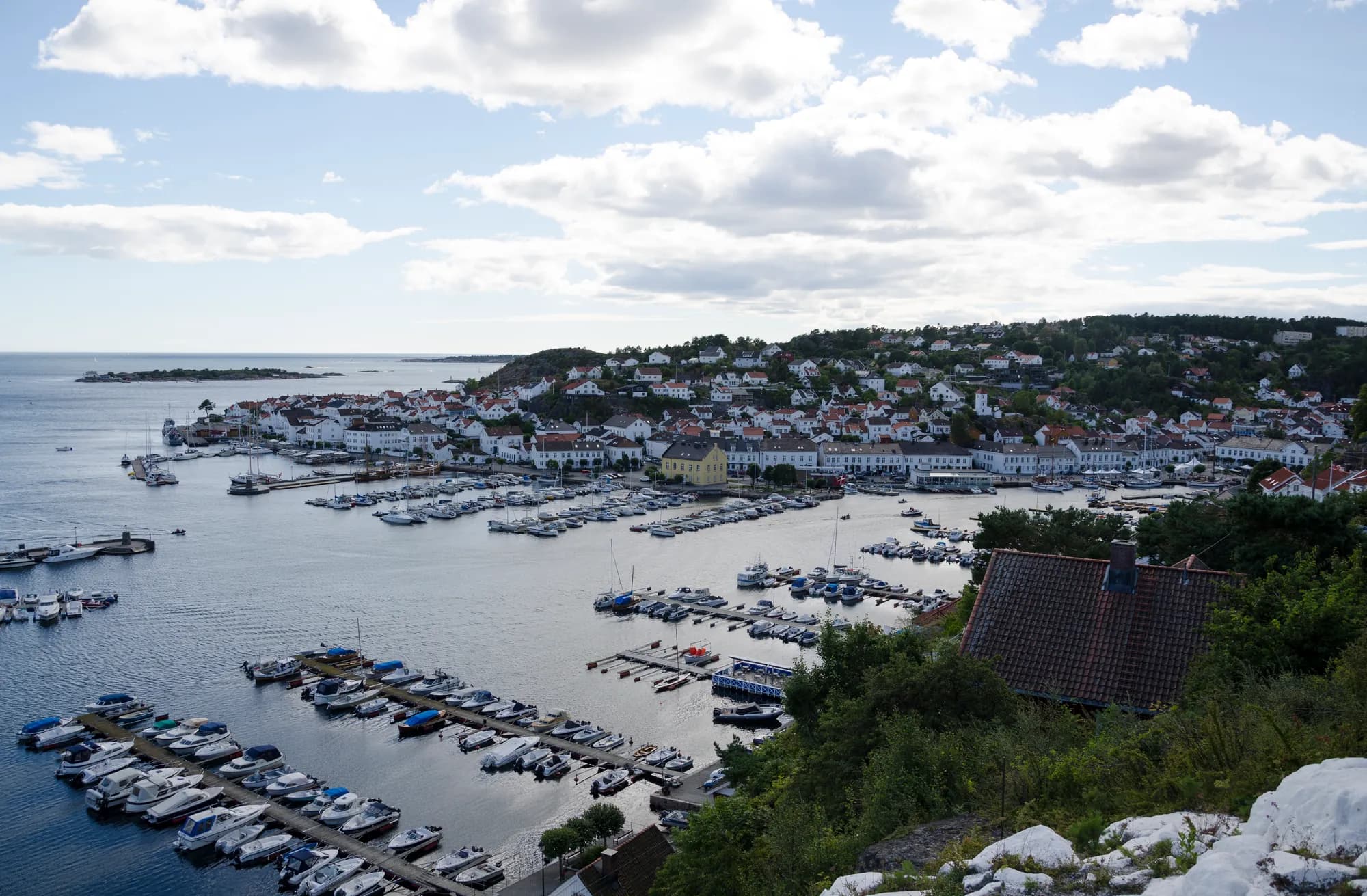
Risør is called Den hvite by, the white town, because of the white patrician houses around its harbour. In early August, Trebåtfestivalen fills the harbour with old wooden boats.
Don't miss: Risørflekken, the white-painted rock above town that, according to tradition, has guided sailors into the harbour since the 17th century.
Motorhome tip: The municipal motorhome car park at Tjenna has 30 pitches measuring 5 x 10 metres, five minutes from the square and signposted from fv. 416, with electricity, water and basic emptying facilities. Booking is not possible. If it is full, motorhomes can park free at Risørhallen. During Trebåtfestivalen the organiser manages parking.
8. Kragerø — Munch, Kittelsen and Jomfruland
Edvard Munch lived in Kragerø from 1909 to 1916 and began his paintings for the University Aula here. Theodor Kittelsen was born in town, and his birthplace is a museum in summer — the trolls are a good introduction for children.
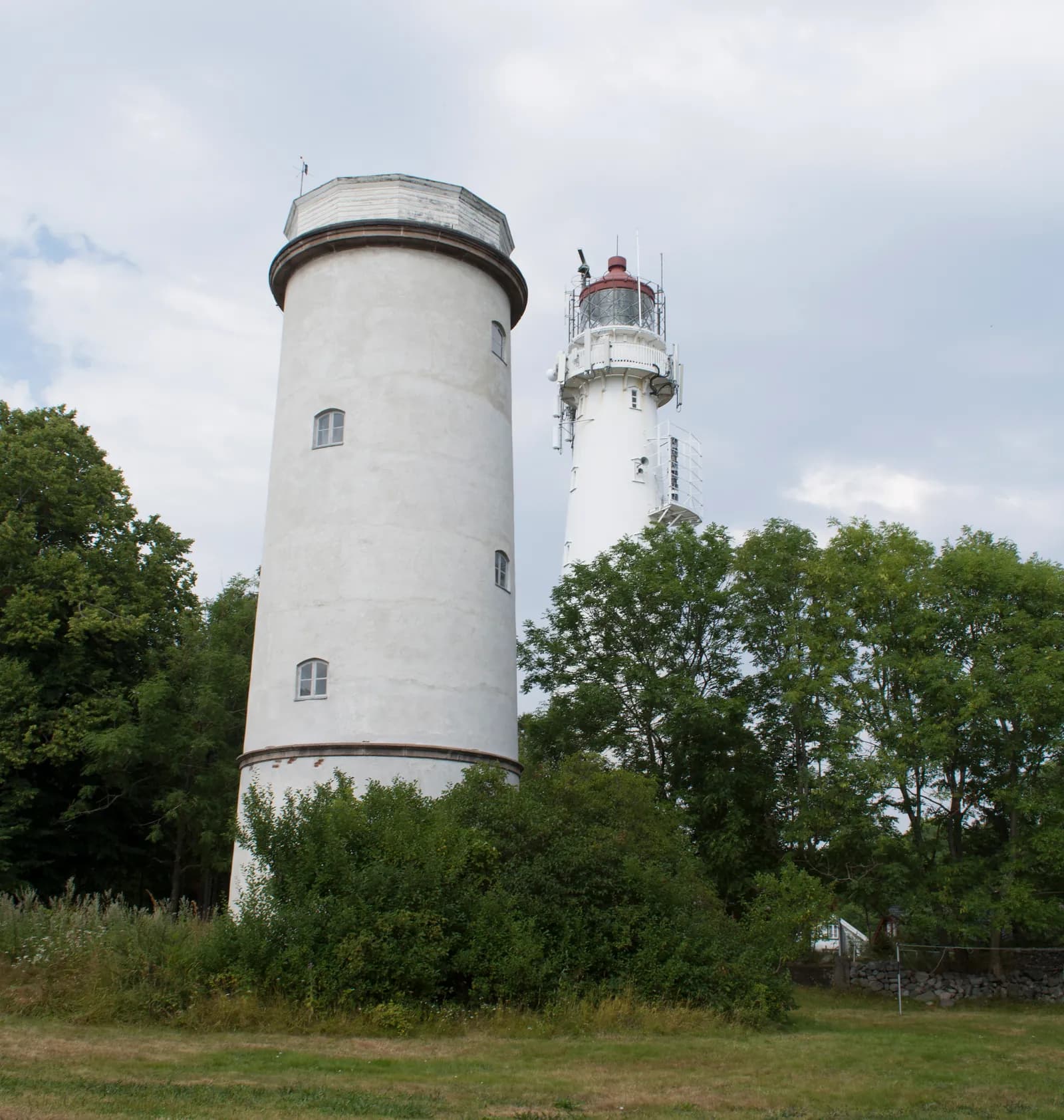
Don't miss: Jomfruland. Boats leave from the ferry quay in the town centre, and bicycles can be taken on the ferry. Much of the island is national park, with a pebble beach on the outer side, sandy beaches on the inner side and an old lighthouse open in summer. The little pond south of the lighthouse is said to be where Kittelsen imagined “Nøkken”.
Motorhome tip: Central Kragerø is steep, with stairs and alleys no motorhome can pass — leave it parked. A private car park on Stilnestangen, just under a kilometre's walk from the square, is run by Onepark, which lists a separate, higher motorhome rate. Cameras read the number plate, and you pay by app or at the machine. It is simply a car park: Onepark mentions no electricity, water or emptying facilities. Lovisenberg Familiecamping, around six kilometres away, has its own beach and saltwater pool with a water slide, open every day in July.
Practical info for motorhomes
Roads: The E18 is a four-lane motorway for much of the way from Kristiansand to Tvedestrand, and two lanes further east. Fv. 420 runs from Dyreparken via Lillesand and Grimstad to Arendal. No mountain crossings or winter closures. From Tvedestrand to Risør, the E18 to Akland and fv. 416 into town are easiest in a large motorhome — the GPS may suggest narrower country roads. Otherwise, the tight spots are in the towns.
Tolls: Toll points on the E18 between Arendal and Tvedestrand and around Kristiansand. A motorhome over 3,500 kg registered as M1 only receives the light-vehicle rate with an AutoPASS agreement and tag.
Parking: Town centres fill up in July — use the motorhome parking listed under each stop.
Overnight stays: The right of public access applies to tent camping on uncultivated land: at least 150 metres from an inhabited house or cabin, and no more than two nights without the landowner's permission. The shoreline is mostly private, so use campsites and designated pitches. Do not drive off-road.
Campsites:
- Dyreparken Bobilcamp, Kristiansand — maximum 8 metres, March–October
- Hamre Familiecamping, Hamresanden — open all year
- Roligheden Camping, Kristiansand — near the centre, May–September
- Tingsaker Familiecamping, Lillesand — April–August
- Moysand Familiecamping, Grimstad
- Hove leirsenter, Tromøy
- Risøy bobilcamp, Gjeving — May–October, except two festival weeks in July
- Risør Resort Moen Camping, Risør
- Lovisenberg Familiecamping, Kragerø — May–September
Fuel: Stations are frequent along the E18 and in the towns.
Waste disposal: Municipal dump station at Tjenna in Risør, and another beside Circle K at Frydendal. Free emptying at Grenstøl beside the E18 in Tvedestrand; Kragerø municipality has a dump station in Sannidal, by the old approach road south of the Esso station, from spring to autumn. Dyreparken Bobilcamp has no emptying facilities but directs visitors to free emptying in Sørlandsparken, five minutes away. Otherwise, use campsites — check bobilplassen.no.
Ferries: None along the route. Take the Blindleia boat and boats to Merdø, Lyngør and Jomfruland as a passenger. “Øya” only runs in midsummer, and the Merdø boats run daily only during the school summer holidays. Jomfruland timetables are on Farte (farte.no); ask tourist information about the others.
Combine with
- Ryfylke and Lysefjorden — continue west from Kristiansand on the E39 towards Stavanger.
- Lindesnes and Lista — Lindesnes lighthouse: Norway's first lighthouse, at the southernmost point of the mainland, a little over an hour west of Kristiansand.
- Telemarkskanalen and Vest-Telemark — from Kragerø it is around an hour to Skien, where the canal begins.
- Setesdal and Hovden — also starts in Kristiansand and heads north along rv. 9 to the top of the valley.
Weather
Summer here often brings many sunny days. In spring and early summer, fog can settle over the archipelago when warm air meets cold sea. Check yr.no for Kristiansand, Arendal and Risør — bathing temperatures are listed there too.
This route is part of Bobilvei's hand-picked motorhome routes in Norway. Every route is quality-checked with a focus on motorhome suitability, parking and local experiences.