- Route
- Svolvær – Å i Lofoten (E10, National Tourist Route Lofoten)
- Length
- about 190 km including side trips (E10 alone: around 130 km)
- Driving time
- Around 4 hours without stops, plus waiting time at Nappstraumtunnelen
- Recommended number of days
- 5–7
- Best season
- June–August (midnight sun from late May to mid-July), September–March for northern lights
- Difficulty
- Moderate. Narrow bridges and side roads, many tunnels. Requires patience and a slow pace.
- Last checked
- October 2026
Why this route?
Lofoten appears on countless wish lists — and lives up to expectations. Sheer mountains rising straight from the sea, brilliant white beaches with turquoise water, charming fishing villages with fishermen's cabins from the 1800s. A motorhome gives you the freedom to stop wherever appeals, wake with mountains outside the window and take the day as it comes.
The E10 through Lofoten is a National Tourist Route connecting the whole island chain. A useful tip: do not drive straight through. Set aside at least five days. The best experiences hide along the side trips.
Stops along the route
1. Svolvær — the gateway to Lofoten
Lofoten's “capital”, with a lively harbour, galleries and restaurants. A good base for stocking up before heading west.
Don't miss: Lofoten Krigsminnemuseum in the centre, and Svolværgeita — the peak with two “horns” on the mountain above town.
Motorhome tip: Fill the tank and empty the toilet here. Lyngvær Lofoten Bobilcamping lies on the E10 twenty kilometres west, just beyond the turn-off to Henningsvær.
2. Kabelvåg — Lofoten's oldest fishing village
Six kilometres west of Svolvær. Just outside the centre, at Storvågan, stood the medieval town of Vágar.
Don't miss: SKREI at Storvågan, officially opened in September 2026: Lofotmuseet, Lofotakvariet, Galleri Espolin and a new exhibition building on one ticket.
Motorhome tip: Kabelvåg Feriehus & Camping, a kilometre from the centre, is open all year and has its own dump station.
3. Henningsvær — the Venice of Lofoten
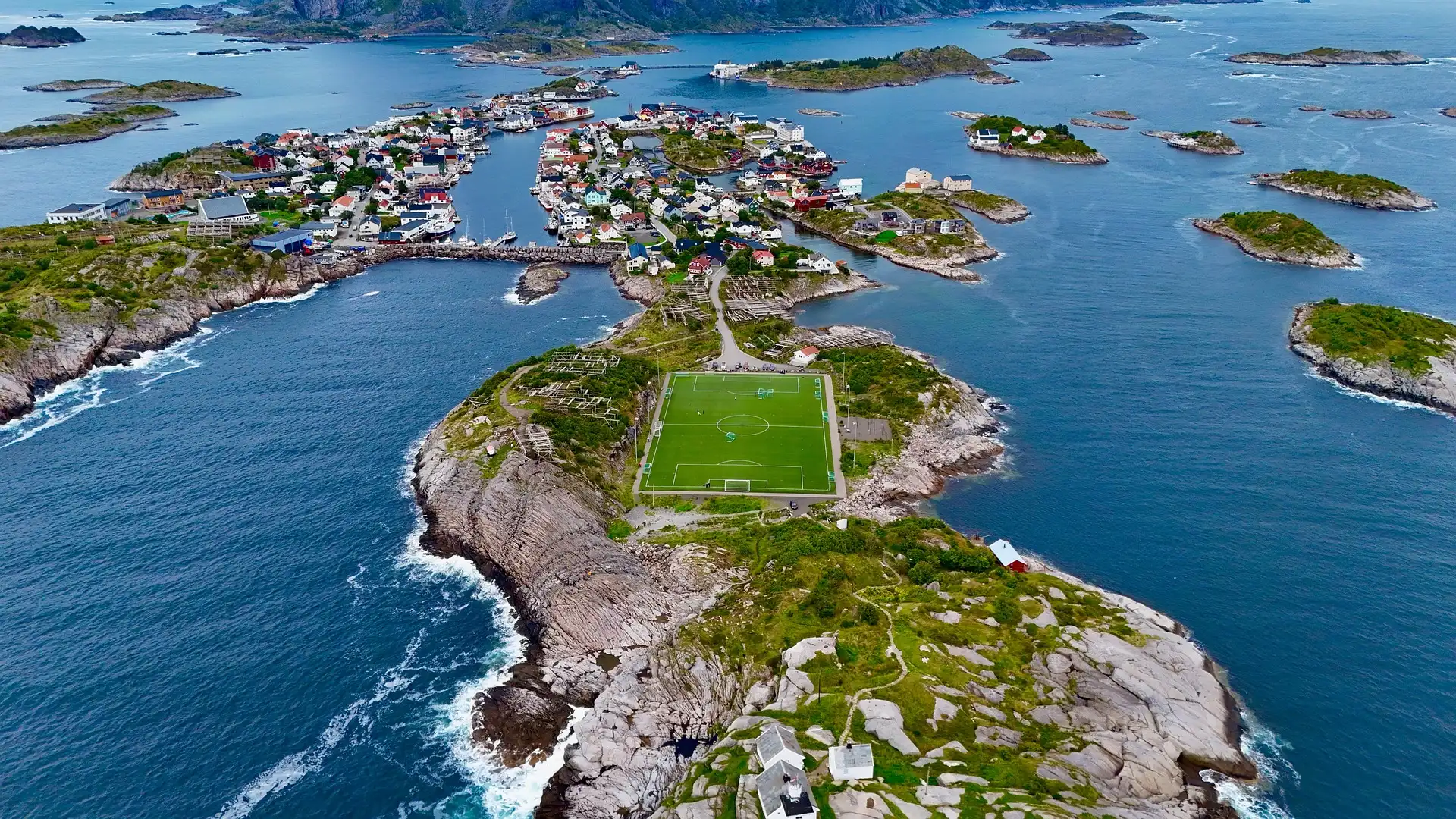
A picture-book fishing village, built on several small islands linked by bridges. Art, galleries, cafés and the famous football pitch on the islet.
Don't miss: Trevarefabrikken — a former woodworking factory from 1948, now with a hotel, café and restaurant.
Motorhome tip: Both approach bridges have traffic lights, and the last has a carriageway only three metres wide. Park at the paid car park on Engøya, between the bridges, and walk the 1.5 kilometres in. It can fill up in July.
4. Lofotr Vikingmuseum — the chieftain's farm at Borg
A reconstructed Viking-age chieftain's house, 83 metres long. The original was excavated in the 1980s, and no known Viking-age building is larger. Interactive and especially good for children. Opening hours are short in winter.
5. Leknes
Lofoten's shopping centre. A practical stop for fuel and groceries, with the dump station on the E10 just east of town. From here it is around ten kilometres to Hauklandstranda.
6. Hauklandstranda and Utakleiv
Two of Norway's most spectacular beaches, with just a mountain between them. Turquoise water, white sand, mountains on all sides. Utakleiv is a classic northern lights photography spot.
Motorhome tip: Follow signs for “Uttakleiv”. The road has only around four metres of asphalt — use the passing places, including inside the narrow tunnel to Utakleiv (signed height 4.5 metres). Haukland has nine paid motorhome pitches; the lower parking level has a height restriction.
7. Nusfjord
Few fishing villages in Lofoten are so well preserved. Most buildings date from the 1800s. Narrow lanes between yellow and red fishermen's cabins. Quiet and authentic — old Lofoten.
Motorhome tip: The road in from the E10 has only 4.6 metres of asphalt for six kilometres. Park in the car park and walk in.
8. Reine
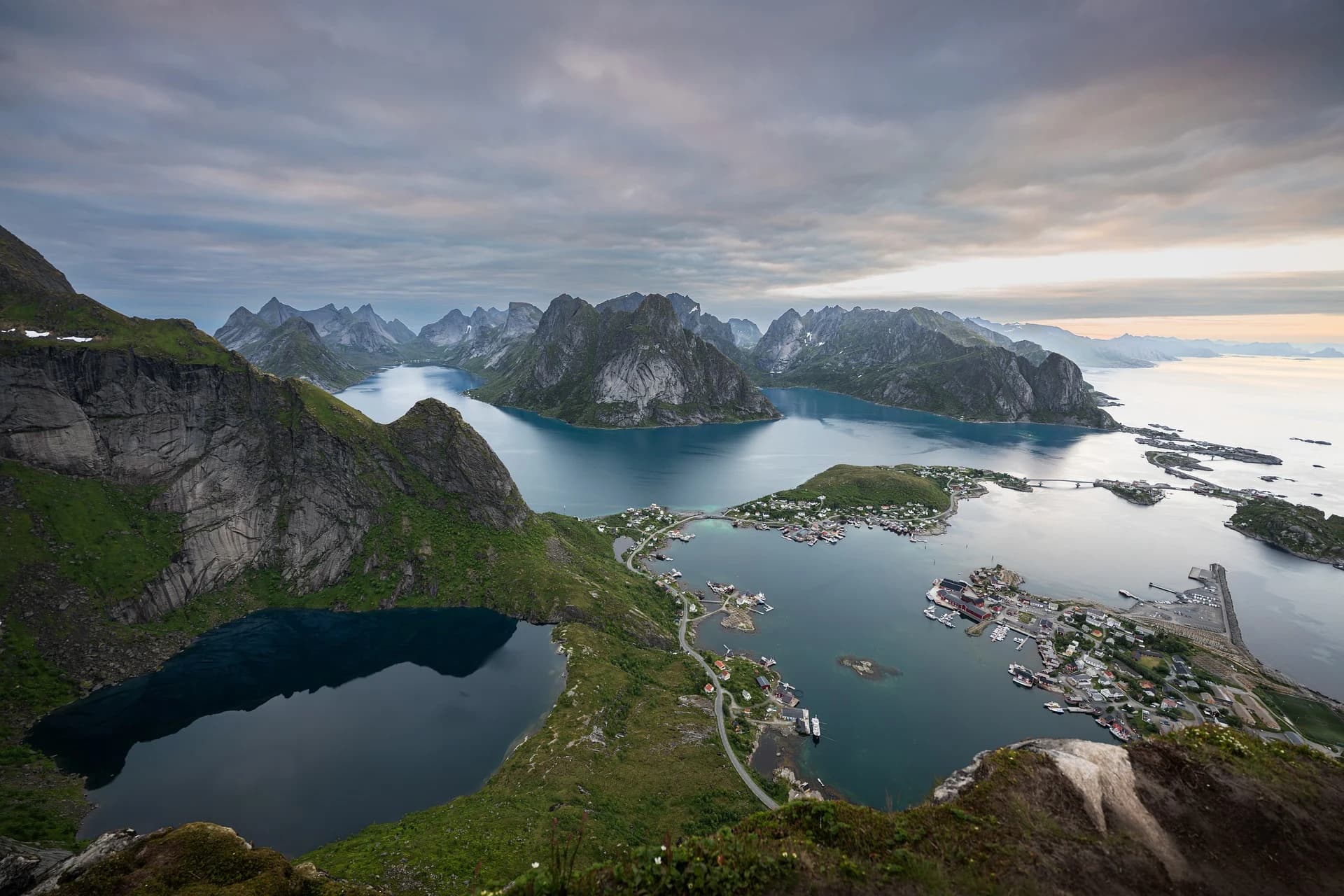
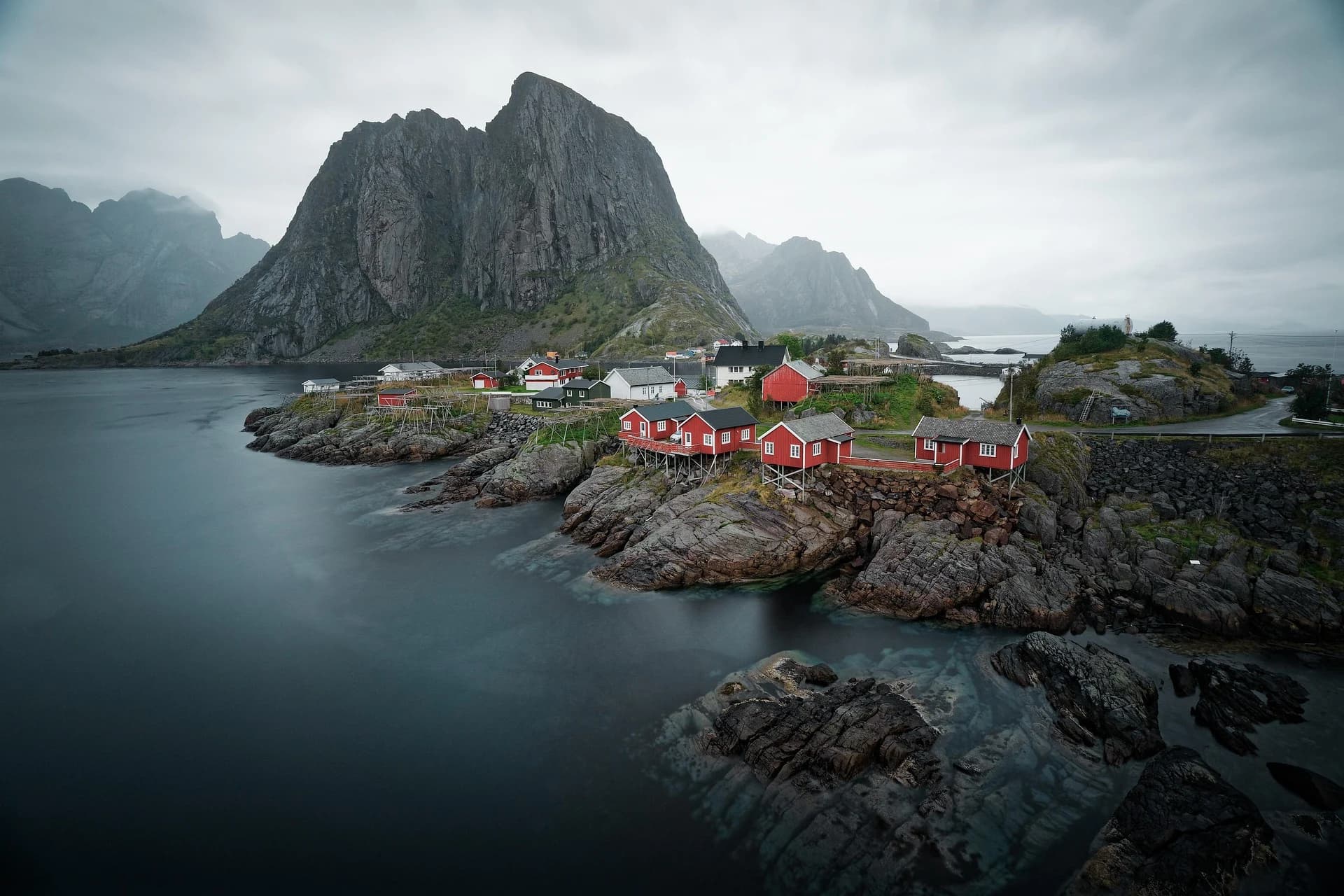
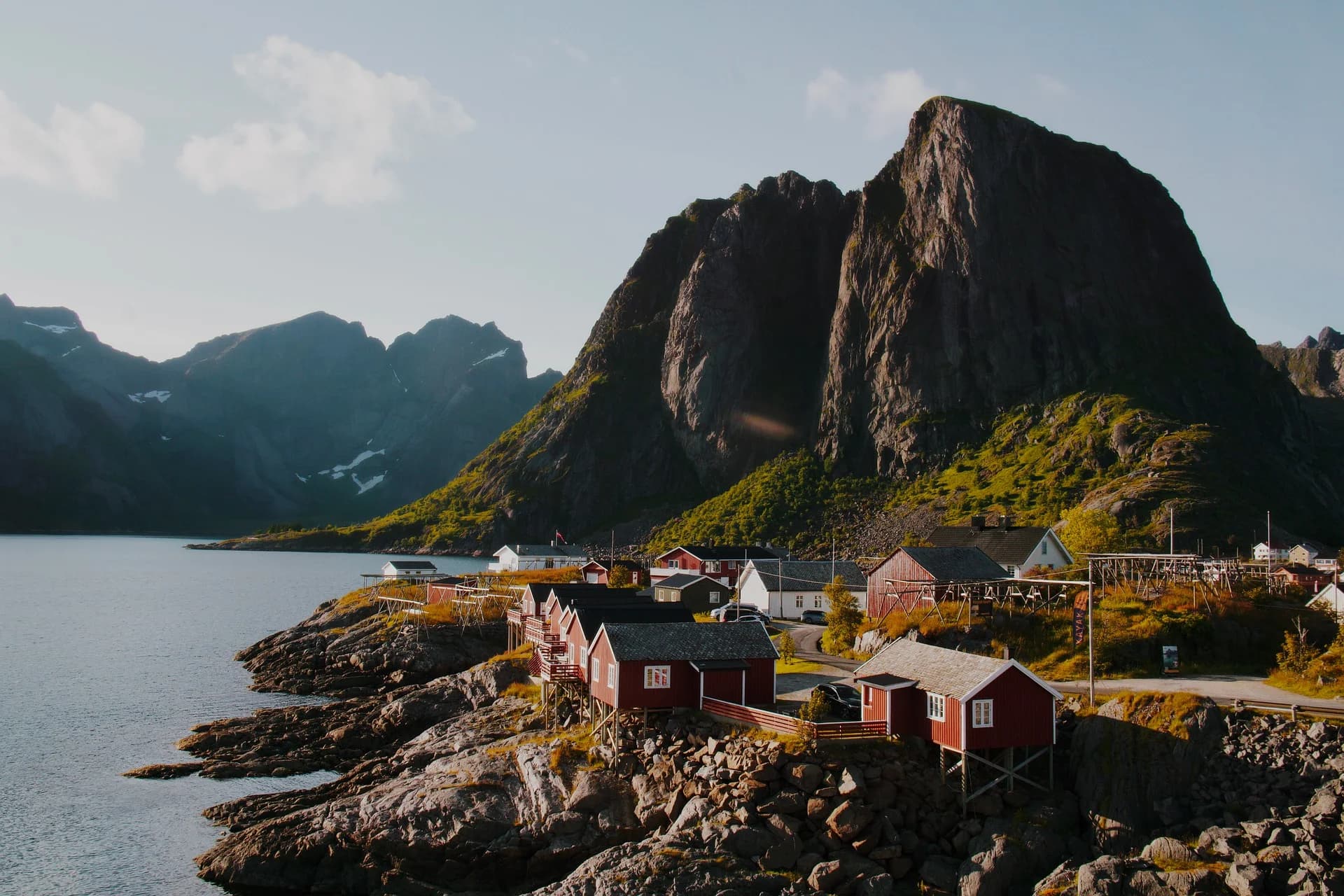
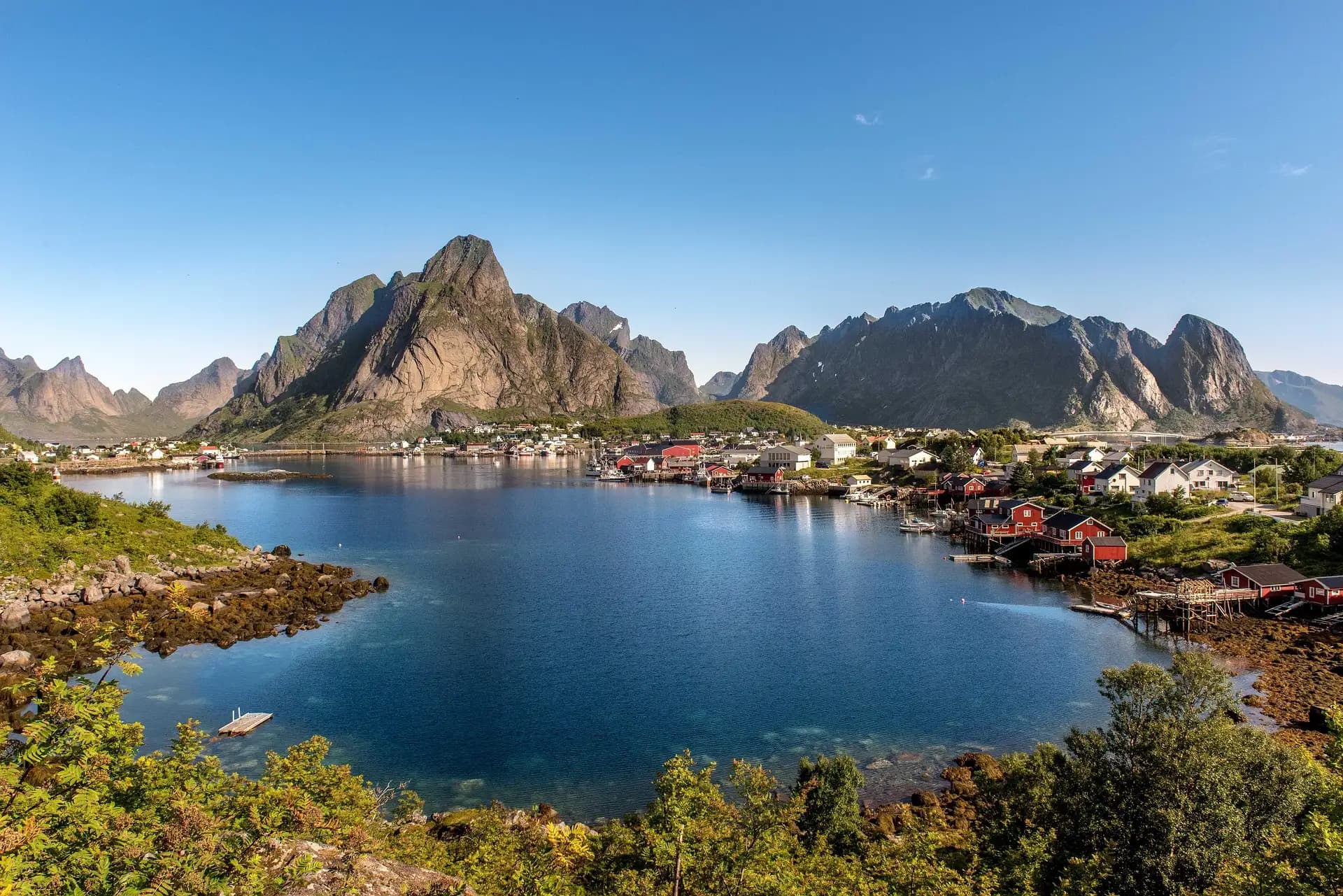
The postcard scene. Mountains reflected in the fjord, red fishermen's cabins along the water. Many consider this Norway's most beautiful place. Just before it lies Hamnøy, with fishermen's cabins on the smooth coastal rocks.
Don't miss: Reinebringen — just under 2,000 steps up to 484 metres, around two kilometres there and back. Steep, but worth it. Not recommended in the winter half of the year.
Motorhome tip: Just before Reine the E10 has two long single-lane bridges with lights — wait for green. All of Reine is a no-parking zone except at signed spaces; use Reine ytre havn. The campsites at Ramberg are half an hour away.
9. Å i Lofoten — the end point
The road ends here, literally. Å is a living museum — stockfish production, a bakery, fishermen's cabins and an atmosphere that takes you back 100 years.
Don't miss: Norsk Fiskeværsmuseum and the bakery from 1844 with cinnamon buns.
Motorhome tip: Park in the large car park where the E10 ends, just after the tunnel. Moskenes Camping lies by the ferry quay in Moskenes, five kilometres back.
Practical info for motorhomes
Roads: The E10 and side roads take vehicle combinations of 19.5 metres, and the lowest signed height on the E10 is 4.2 metres, in Rørvikskaret-tunnelen (Statens vegvesen's road database). Width is the challenge — a motorhome can be 2.60 metres wide. Even the E10 has narrow points: a temporary bridge with 3.8 metres clear width at Knutstad on Vestvågøy, two old bridges just over four metres wide at the Nusfjord turn-off and two single-lane bridges at Reine. Side roads have only 4–4.6 metres of asphalt: use passing places.
The steep subsea Nappstraumtunnelen between Vestvågøy and Flakstad is being rebuilt until December 2027. It is closed at night with one passage allowed, and by day traffic travels in a convoy behind an escort vehicle once or twice an hour, except 15 July–15 August. Check the times at vegvesen.no.
Parking: Lofoten's outdoor recreation regulations prohibit motorhomes from parking between midnight and 6 am in certain car parks — in Vågan at Rørvika, Kalle, Stranda under fjellet and along Lille Kongsvatn. Many car parks charge. Never park in passing places.
Overnight stays: Use campsites when you can. Where parking is allowed, you can generally also sleep in your motorhome — follow the signs. At rest areas and on uncultivated land, Visit Lofoten asks for 150 metres from houses and cabins and four metres between vehicles. Never drive off-road into the terrain.
Campsites:
- Lyngvær Lofoten Bobilcamping — on the E10 west of Svolvær, drop-in only
- Kabelvåg Feriehus & Camping — just by Kabelvåg, open all year
- Lofoten Beach Camp — by the beach at Flakstad near Ramberg, February–October
- Ramberg Resort (formerly Ramberg Gjestegård) — by Rambergstranda, May–September
- Moskenes Camping — by the ferry quay in Moskenes, motorhome pitches can be booked
Fuel: Svolvær and Leknes have several stations. West of Leknes, stations lie along the E10 at Ramberg and Reine. Fill the tank in Leknes.
Waste disposal: Not in toilets along the tourist route. Nasjonale turistveger lists dump stations in Svolvær, Lyngvær, Torvdalshalsen, Leknes, Ramberg, Hamnøy and Reine.
Ferries: You need no ferry — the E10 runs all the way from the E6 at Bjerkvik. By boat:
- Bodø–Moskenes — about 3 h 15 min direct, longer when the ferry calls at Værøy and/or Røst. The only service here that can be booked, and only for some spaces: book well ahead in summer at torghatten.no.
- Skutvik–Svolvær — summer only, and cannot be booked: arrive early in July.
- Fiskebøl–Melbu — about 25 min, towards Vesterålen.
Combine with
- Vesterålen and Andøya — continue north from Svolvær. Whale watching from Andenes, the beach at Bleik, quieter than Lofoten.
- Helgelandskysten — a southbound coastal route with ferry legs and Torghatten.
- Hurtigruten — the ships only take vehicles under 2.3 metres high, so most motorhomes cannot travel aboard.
- Saltfjellet and the Arctic Circle — E6 south from Bodø over Saltfjellet to Mo i Rana, around 230 km.
Weather
The sea makes Lofoten milder in winter than its latitude suggests, but summer is rarely warm. In July the daily average is around 12–13 degrees, and rain can arrive at any time, most of all in autumn. Winter brings northern lights but challenging driving conditions. Check yr.no for Svolvær/Leknes/Reine.
This route is part of Bobilvei's hand-picked motorhome routes in Norway. Every route is quality-checked with a focus on motorhome suitability, parking and local experiences.